
A soil h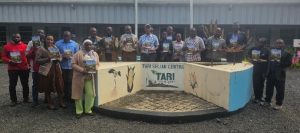 ealth management manual tailored to Tanzania’s agricultural systems was officially launched at the project meeting held in Arusha on May 6, 2026. The manual was co-developed by project partners NIBIO, TARI and ZALIRI together with key stakeholders working on soil health in Tanzania. The manual is now being used to train national institutions targeting field researchers, agriculture extension agencies, farmer groups, and other key public and private sectors. It consists of three main modules focusing on soil health concepts, monitoring and assessment methods and a set of soil health management practices relevant to the local context.
Biochar production using a conical flame curtain kiln (called also the Kon-Tiki method) was demonstrated by NIBIO staff (Gerard) and his team to the Soil Health project p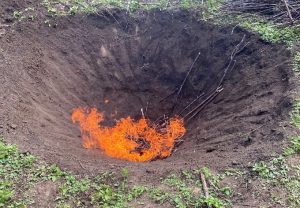 artners at Arusha, TARI centre. The trained project staff will further train lead farmers and others in their project areas where biochar technology is applicable.
On May 7, a farmer field day was held in Kwaraa village (Babati district) to show case sunflower plots managed with good agricultural practices (improved variety, proper spacing, minimum tillage, and organo-mineral fertilizers) against the control farmers using traditional farming practices. Approximately 55 participants attended, including a farmer group consisting of 9 female farmers. It was realised that there is a potential to improve soil fertility in the area by introducing biochar technology utilizing dried sunflower stalk
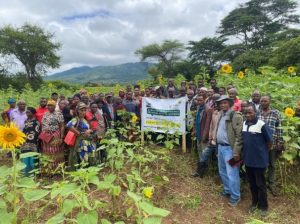 .
.